Designing Autumn Patterns for UK Craft Fairs: Motifs, Colours and Repeats
Autumn is the best-behaved season for pattern designers. The colours arrive on their own timetable: bracken turning rust in late September, sloes blackening in the hedge, the first frost flattening the dahlias. You do not have to invent a palette, only notice one. What follows is a working method for turning that into a small collection you can print, stitch and sell before the Christmas rush swallows the calendar.
Start with motifs you can actually find
A customer at a fair in Bakewell or Abergavenny knows an oak leaf from a sycamore, and that familiarity is your advantage. Draw from life where you can. Photograph the hedge on a dull day, bring a few leaves home, and simplify each shape down to two or three tones. Then run the silhouette test: fill the motif solid black. If it still reads at 2 cm across, it will work in a repeat. If it turns into a blob, redraw it.
Hedgerow and field
- Rosehips, sloes and rowan berries, ideally with a leaf attached
- Blackberries in small clusters rather than singly
- Teasel heads, hop cones and poppy seedheads
- Wheat or barley ears, and the stubble lines left behind them
- Spindle berries, hawthorn and crab apples
Woodland floor
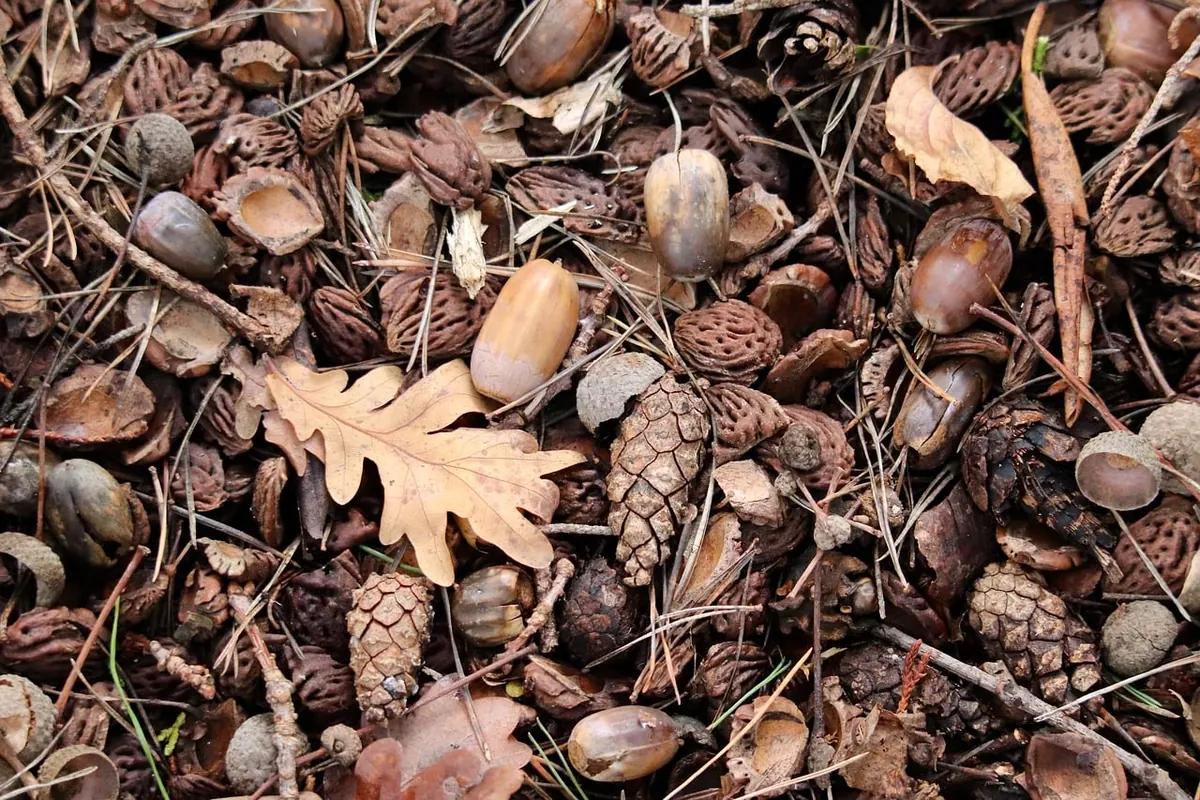
Acorns, sweet chestnuts, conkers and their spiny cases, beech mast and sycamore keys. Oak and beech leaves are stronger as outlines than as detailed renderings. For fungi, skip the fly agaric, which has been printed on everything since about 2012, and try puffballs or bracket fungus instead.
Made things
Fair Isle bands, cable knit, tartan grids, patchwork squares, wool tweed flecks, wellington boots, drystone wall courses, cottage rooflines, woodsmoke. These carry the season just as well as a leaf does, and they tend to sell to people who would never buy a berry print. Three or four motifs make a collection. Eight make a range, and a range is harder to print, edit and explain.
Palettes that survive a dull day in a marquee
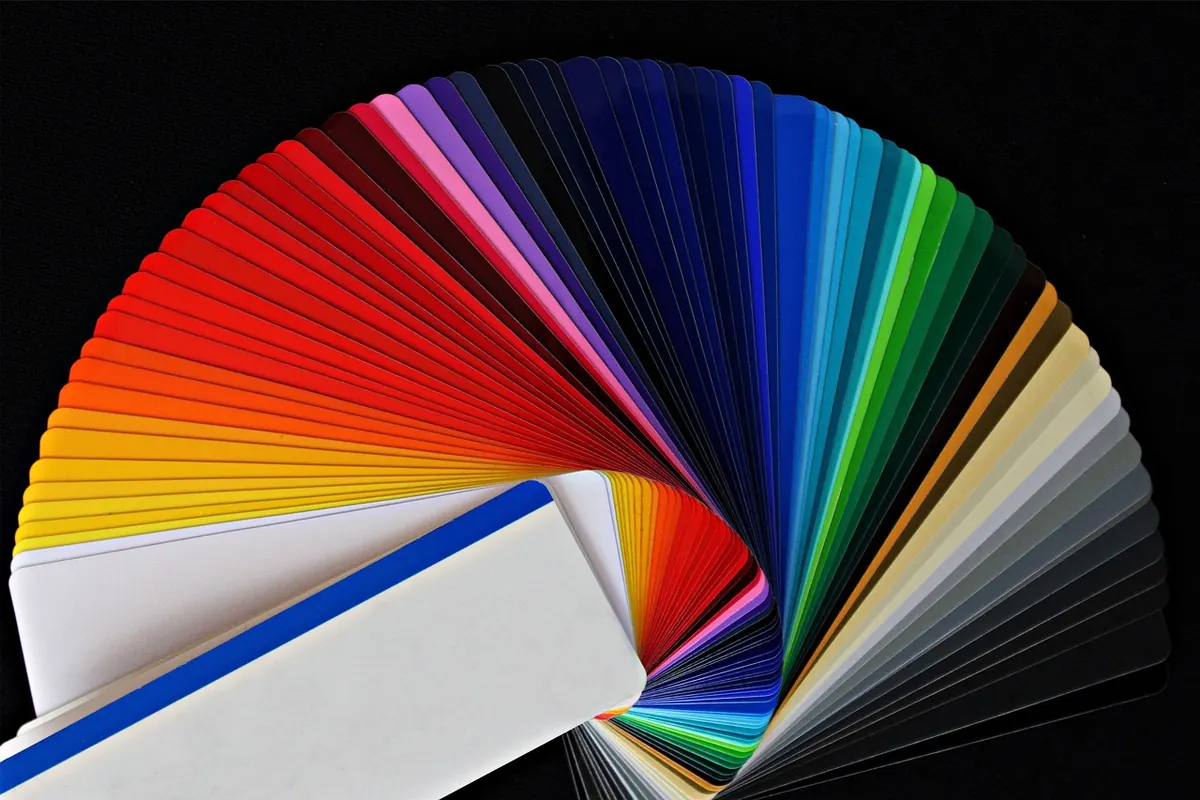
Marquee light is grey and unforgiving. A bright pumpkin orange that looked wonderful on screen will flatten everything around it under canvas, and customers read the whole stall as Halloween, which narrows the sale. Muted colour sells for longer in the season and into November.
A simple structure: choose two darks, two mid-tones, two lights, then add one accent. Darks might be charcoal and damson. Mids could be russet and moss. Lights are oat, mushroom or clotted cream. The accent — rowan red, crab apple, a hint of faded teal — should cover no more than roughly a tenth of the tile. Convert the design to greyscale and squint: if the value contrast disappears, the pattern will look like mud from three metres away, which is exactly the distance most customers will view it from.
Two practical points. Printers handle muted colour differently from your monitor, so order a swatch or a single sample before committing to a full run of fabric. And keep metallics and gold out of the autumn collection; they pull the eye towards Christmas and date the designs to a six-week window.
Repeat sizes for a real market stall
Scale should be decided by the product, not the artwork. Work backwards from the finished item:
- Small goods — badges, bookmarks, scrunchies, lavender bags: a 4–8 cm repeat, with motifs around 1–2 cm.
- Mid-weight goods — zipped pouches, cushion fronts, aprons, tote bags: 15–25 cm, or a 20 cm tile with a 5 cm motif.
- Larger pieces — tea towels, table runners, quilt panels: 25–35 cm, letting hero motifs run up to 8–10 cm wide.
The repeat type matters as much as the size. A half-drop suits drifting leaves. A tossed or filled layout suits berries and conkers, which have no natural orientation. A brick repeat gives the tidy rows that work for acorn bands and knit-inspired stripes. If the pattern needs structure, an ogee or simple trellis will hold a scattered motif together without looking fussy.
Five checks before you send anything to print
- Tile the design four by four and view it at 25 per cent. Any obvious clump or gap will show up immediately.
- Offset the tile by half horizontally and vertically. Ghost lines at the seams mean the edges are not matching.
- Print it on paper at final size and pin it to a wall. Stand three metres back and look again.
- Cut the print into shapes — a tote front, a bookmark strip, a small square — and check that a single motif still lands in each one.
- Print or order one sample on the exact base fabric you plan to sell, wash it once, and see how the colours settle.
Making a collection hang together
Limit yourself to one palette, one line weight and one level of detail across the whole collection. A useful shape is a hero pattern, two supporting patterns and a blender — a small, dense spot print that fills gaps on a stall and gives customers something at the lower end. Add a plain co-ordinate or a simple stripe, because most people buy the plain one.
Keep your files tidy and consistent: seamless tiles, layered originals, 300 dpi at final print size, and a written colour reference so reprints match. Follow your printer's specification for file type and colour space rather than guessing. If you use bought clip art or scanned ephemera, check the licence actually covers commercial printing, and keep original work original — copying a well-known designer's motifs is not worth the risk to your reputation at a local fair.
Costing, insurance and the boring bits
Work out the true cost of each item before you price it: fabric, ink, packaging, stall fee divided across your stock, and your own time at a rate you would accept from someone else. A simple spreadsheet is enough. If you are selling regularly, check HMRC guidance on trading income and take advice from an accountant rather than relying on a friend's recollection.
Most venues ask for public liability insurance and some require a trading licence from the local council, so read the organiser's pack properly and speak to an insurer if anything is unclear. General guidance only — your circumstances may differ.
Packing the stall, and packing the patterns
Take the same print in three sizes so there is an easy entry item, a mid-priced item and one larger piece. Label clearly: what the pattern shows, the fabric, and how to wash it. A small card explaining that the motifs were drawn from a local hedgerow does more selling than any sign about quality. Bring spare thread, a lint roller, and a basket of seconds with the faults marked honestly.
Then do one thing before you commit to a full run: print a single bookmark or tea towel and live with it for a fortnight. Autumn patterns improve when you have watched them through a few grey mornings — and by the time the fairs arrive, you will know exactly which ones deserve the shelf space.
Photo: Nennieinszweidrei / Pixabay
How to Carve Rubber Stamps for Repeating Motifs on Fabric
Carve a simple rubber stamp, load it with fabric ink and print evenly spaced repeats onto cotton or linen...
Motif vs Pattern: What's the Difference in Surface Design?
A motif is a single self-contained shape; a pattern is what you get when repeats, layout, scale and colour...
About Us